

One storefront or several
Catalogue, search, cart and checkout, built to stay fast as the catalogue grows. Run one store, or several brands and regions on one backend that share inventory and still look like separate businesses.
Full service ecommerce, built in Montréal.
Storefront, checkout, payments, trade accounts, merchandising, finance and the operations behind them. One senior team builds it, hosts it, and keeps developing it while you run the business.
What we build
Most of what makes commerce hard is not the storefront. It is everything the storefront depends on. Three parts, and you can take them one at a time.
The shopfront and everything a customer touches.
Catalogue, search, cart and checkout, built to stay fast as the catalogue grows. Run one store, or several brands and regions on one backend that share inventory and still look like separate businesses.
Homepage sections, carousels and campaigns editable by your marketing team in the back office. No ticket, no deploy, no waiting for us.

Sales, promo codes and price lists, scheduled to start and end on their own. Your team sets them up in the back office without waiting for a developer.
Who buys, how they pay, and how it reaches them.

Sell to businesses and to the public from the same store. Trade customers apply for an account and you approve it. Once they sign in they see their own catalogue and their own prices, and each person on the account gets only the access you give them.

Keep the payment processor you already use. If it has an API, we connect it. If it needs an integration that does not exist yet, we build it. Canadian processors included.

Every order gets the right box, live rates from each carrier you use, and the best carrier and service picked for it automatically. Labels print in batches and tracking goes to the customer.
The machinery behind the counter, and who keeps it running.
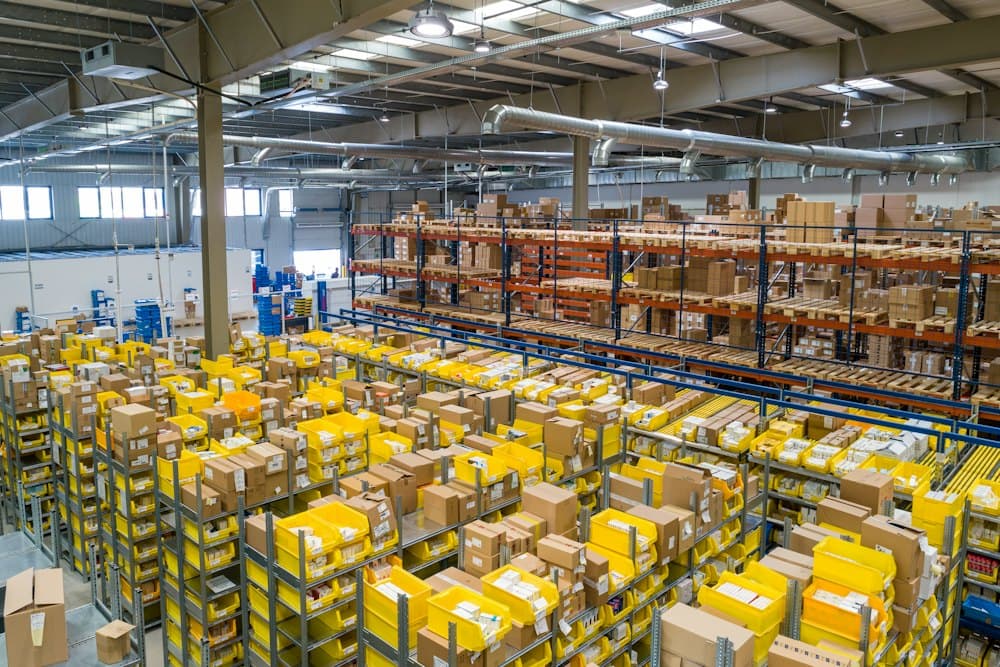
Ordering from suppliers, receiving, inventory, picking, shipping and returns, with the daily jobs that run themselves. The full lifecycle a logistics operation runs on.

When no platform does what your business needs, we write it: your pricing rules, your approval workflows, connections to your ERP, suppliers and warehouse, and internal tools for your team. Custom code you own.

We run the infrastructure. Security updates, monitoring and upgrades are ours, not a line on your team's backlog.
It is modular. Take the parts you need and leave the rest, and if a capability is missing, it gets built. That is the difference between a platform you rent and one that is yours.
Finance and accounting
Closing the books should be a click, not a fortnight of spreadsheets. Most of that fortnight is not accounting. It is getting two systems to agree about what happened.

This is the part nobody puts on a commerce website, and it is the part that decides whether the business trusts the system.
What that looks like in practice
NAPA Auto Parts
Four separate storefronts on one commerce backend, integrated with the accounting, inventory, shipping and payment systems already in use. Trade customers get accounts governed by role, approved before they can order, where the catalogue and the pricing change depending on who is logged in.

Leaving Magento
Every Magento version has an end-of-support date. After it, security patches stop while the store keeps taking card payments. Extended support comes only with an Adobe Commerce licence. Open Source gets none.

A B2B operations platform
A distributor running on a packaged inventory and order system that no longer fit, and could not be extended. We replaced it: supplier ordering, receiving, inventory, order workflow and the scheduled jobs that keep it moving, all built around how the business actually works.
Drag, or use the arrows.
Every one started the same way: read the existing system completely, write down what it really does, then decide what to build. A rebuild that skips that step is a guess with a budget attached.
Coming from an older platform
We assist with the migration rather than hand you a checklist. Catalogue, orders, customers and integrations come across, carried by tooling written for the job rather than re-keyed. We rebuild only what cannot carry forward, and we do it in phases so the shop never closes.
The first step
The same first step as every build above.
Day 1
A call with whoever knows the system best, and you decide what is in scope.
Days 2 to 4
We examine every integration, the data volumes, custom code that will not port cleanly, and the business rules nobody wrote down.
Day 5
A workshop with your team: a phased plan, a risk register, and what moves as it is versus what has to be rebuilt.
After
If you want us to build it, we price the build from the scope we just mapped.
Like a good doctor, we diagnose before we prescribe.
Common questions
Not a salesperson, and not a form that routes to one. Tell us what you are running and what is breaking.
We reply within one business day. Or email hello@productshop.io.